
Tinnitus Treatment in Hanover, PA
If you hear ringing, buzzing or hissing that nobody around you hears, you're not imagining it and you're far from alone. Tinnitus treatment in Hanover, PA starts here at Hanover Hearing Center — and while there's no cure for most tinnitus, there is a great deal that can be done to stop it running your day.
We've treated tinnitus in Hanover since 2012, for patients from Hanover, Gettysburg, Littlestown, McSherrystown, New Oxford and across York County. Our approach is evaluation first, because tinnitus is a symptom rather than a disease, and what helps depends entirely on what's producing it.
When tinnitus needs a doctor, not an appointment with us
Most tinnitus isn't dangerous. These presentations are different and should be seen by a physician or ENT promptly:
- Ringing or noise in one ear only
- A sound that pulses along with your heartbeat
- Hearing that dropped suddenly, within hours or a day
- Tinnitus together with dizziness, vertigo or unsteadiness
- Tinnitus with facial weakness, numbness or a severe headache
Sudden hearing loss especially is time-sensitive — outcomes are better the sooner it's treated. Call us as well, since we can usually test you quickly and forward results, but see a physician first.
Why tinnitus happens
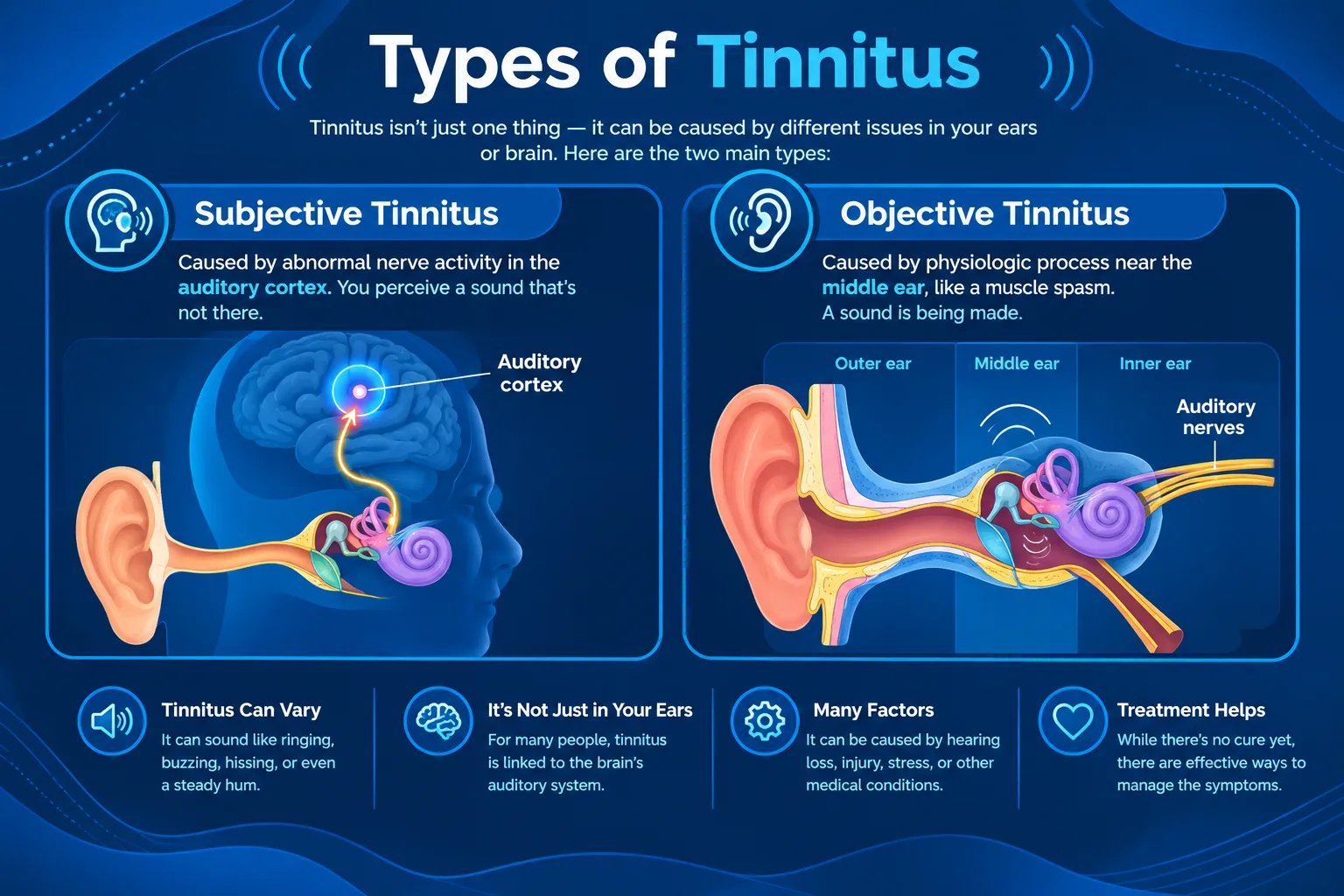
The most common picture looks like this. Hearing declines quietly over years, usually at the high frequencies first. The brain stops receiving input in that range and, in effect, turns up its own internal gain to compensate. What you perceive as ringing is that compensation.
It's why tinnitus and hearing loss so often arrive together, and why many people who come in convinced their hearing is fine leave with an audiogram showing otherwise. It's also why treating the hearing loss is the most reliable lever we have. Anyone considering tinnitus treatment in Hanover should start with a measurement of what their hearing is actually doing.
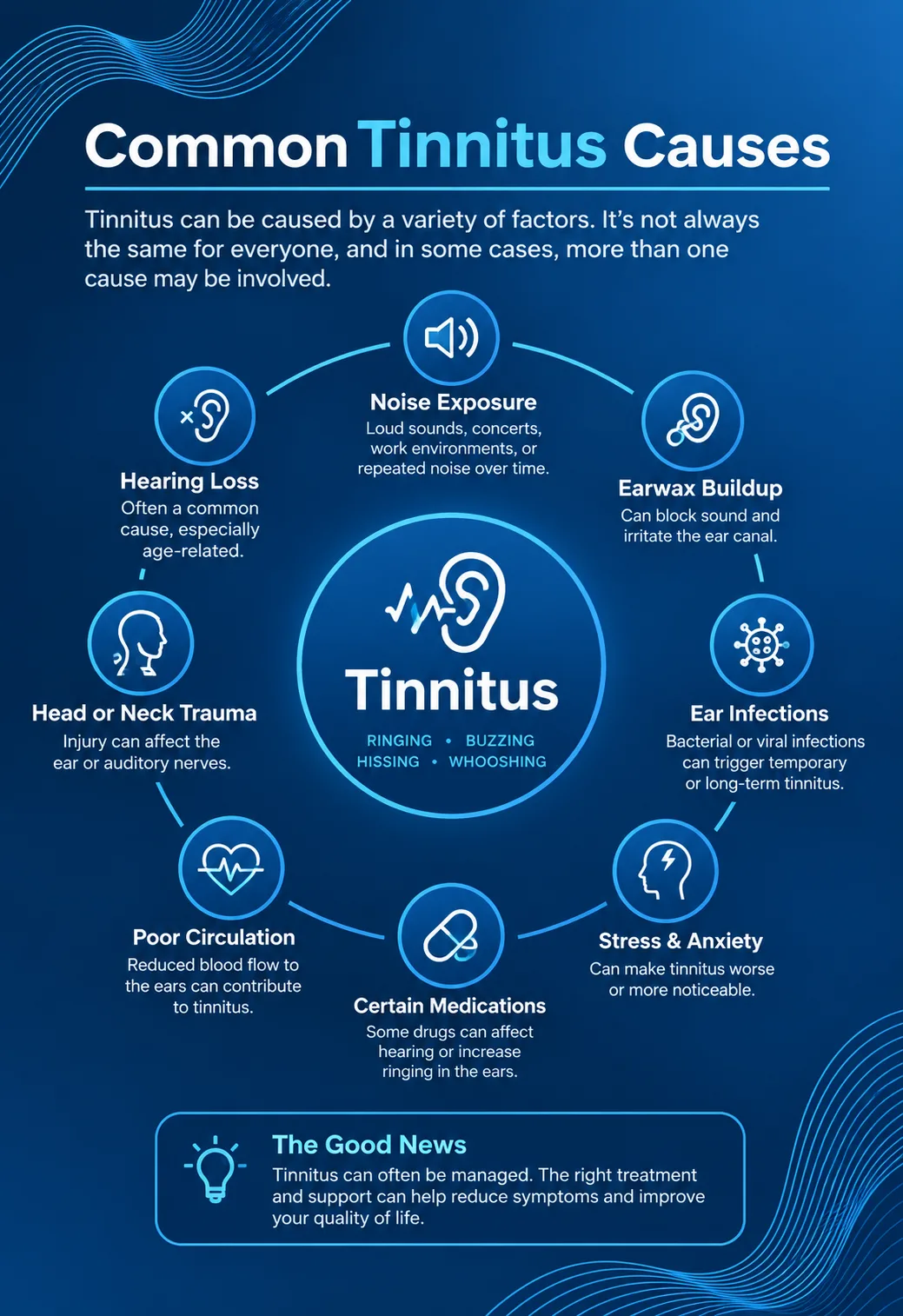
Common causes and contributors
- Hearing lossThe most common associated factor by a wide margin, whether from age, noise, or both.
- Noise exposureFarm equipment, machine shops, firearms, motorcycles, years of loud work. Damage accumulates quietly.
- Earwax or middle ear problemsSometimes genuinely simple, and worth ruling out before anything else.
- MedicationsA number of common drugs list tinnitus as a side effect. Bring your list — and never stop a prescription on your own.
- Head, neck and jaw issuesTMJ problems, neck injuries and dental issues can all play a role.
- Other medical conditionsBlood pressure, thyroid function and Meniere's disease among them.
How we approach tinnitus treatment
No two people describe tinnitus the same way, and no single approach suits everyone. Here's the sequence we follow.
A conversation about what you're experiencing
What it sounds like, when it started, when it's at its worst, and honestly what it's taking from you — sleep, focus, patience. That last part shapes the plan more than the pitch of the sound does.
Ear examination and a full hearing evaluation
We check for wax and physical causes, then run a complete hearing evaluation. Hearing loss is the most common driver, and frequently one people didn't know they had. See our full list of services.
A recommendation built on what we found
Sometimes that's amplification. Sometimes it's sound therapy. Sometimes it's a referral to a physician or a counselor, and we'll say so plainly when it is. If devices are the answer, we'll walk through your hearing aid options without pressure.
Follow-up that continues
Tinnitus management isn't a single visit. Settings get adjusted, strategies get refined, and what works in month three often isn't what we started with.
Widex Zen Tinnitus Therapy
Alongside conventional amplification, we offer Widex Zen Therapy — a structured program combining counseling, amplification, relaxation strategies and a distinctive form of sound therapy.
What sets Zen apart from ordinary masking is the sound itself. Rather than static or white noise, it uses fractal tones: gentle, chime-like patterns that never repeat exactly. Because your brain can't predict them, it tends not to latch onto them the way it does a looping sound, and many patients find them easier to live with over long stretches. The tones play through the hearing aids at levels set to your comfort, and can be adjusted as your needs change.
Zen isn't right for everyone, and it isn't a cure. It's one well-supported tool among several, and whether it belongs in your plan is a decision we make after your evaluation, not before. More about Widex Zen Therapy.
What relief actually looks like
We want to be straight with you, because plenty of advertising isn't. No pill, supplement or device reliably eliminates chronic tinnitus. The clinical practice guideline from the American Academy of Otolaryngology specifically advises against routine use of dietary supplements and medications for persistent tinnitus, because the evidence doesn't support them. We don't sell them, and we'd suggest treating any "tinnitus cure" as a reason for caution.
What's realistic is meaningful and worth having. For most patients, success means tinnitus stops being the first thing they notice in a quiet room, stops interfering with sleep, and fades into the category of things that are present but no longer demand attention. That shift is achievable for a large share of the people who walk through our door, and it changes daily life considerably.
Questions we hear often
Can tinnitus be cured?
Not usually. When tinnitus stems from something reversible — impacted earwax, an ear infection, a medication side effect — addressing that cause can clear it. Chronic tinnitus tied to hearing loss is managed rather than cured, and management works well for a great many people.
Will hearing aids help my tinnitus?
If you have hearing loss along with the tinnitus, they very often do, and it's typically the most effective step available. Amplification restores the input your brain has been missing and brings back the everyday background sound that keeps tinnitus from standing out. Most current hearing aids also include dedicated tinnitus programs, including Widex Zen.
What is Widex Zen Therapy?
A structured tinnitus program combining counseling, amplification, relaxation strategies and fractal tone sound therapy — soft, chime-like tones that never quite repeat, which many patients find less fatiguing than static masking noise. The tones play through your hearing aids and are set to your comfort level.
Why does my tinnitus get louder at night?
It generally doesn't get louder — the room gets quieter. With less competing sound, tinnitus occupies more of your attention, and tiredness and stress make that worse. A fan, a sound machine, or quiet audio at bedtime helps most people, and it's usually the first thing we suggest.
Is tinnitus a sign of something serious?
Usually not. But tinnitus in one ear only, tinnitus that pulses with your heartbeat, sudden hearing loss, or tinnitus with dizziness all warrant prompt medical evaluation. If any of those describe you, see a physician rather than waiting.
Does insurance cover tinnitus treatment?
Coverage varies quite a bit by plan. Call us at 717-359-3303 and we'll check your benefits before your appointment so you know where you stand ahead of time.
How soon might I notice a difference?
Where hearing aids are part of the plan, many patients notice a change within the first few weeks of consistent wear. Sound therapy programs like Zen are typically used over a longer period and adjusted along the way. Neither is instant, and anyone promising otherwise is overselling.
Further reading:
National Institute on Deafness and Other Communication Disorders ·
American Tinnitus Association ·
AAO-HNS Clinical Practice Guideline: Tinnitus
This page is general information, not medical advice. Speak with a qualified
professional about your own situation.
Let's find out what's driving it
Tinnitus treatment starts with a thorough hearing evaluation. Call us or stop in — we'll check your benefits before your appointment.
Book an Appointment 717-359-3303