
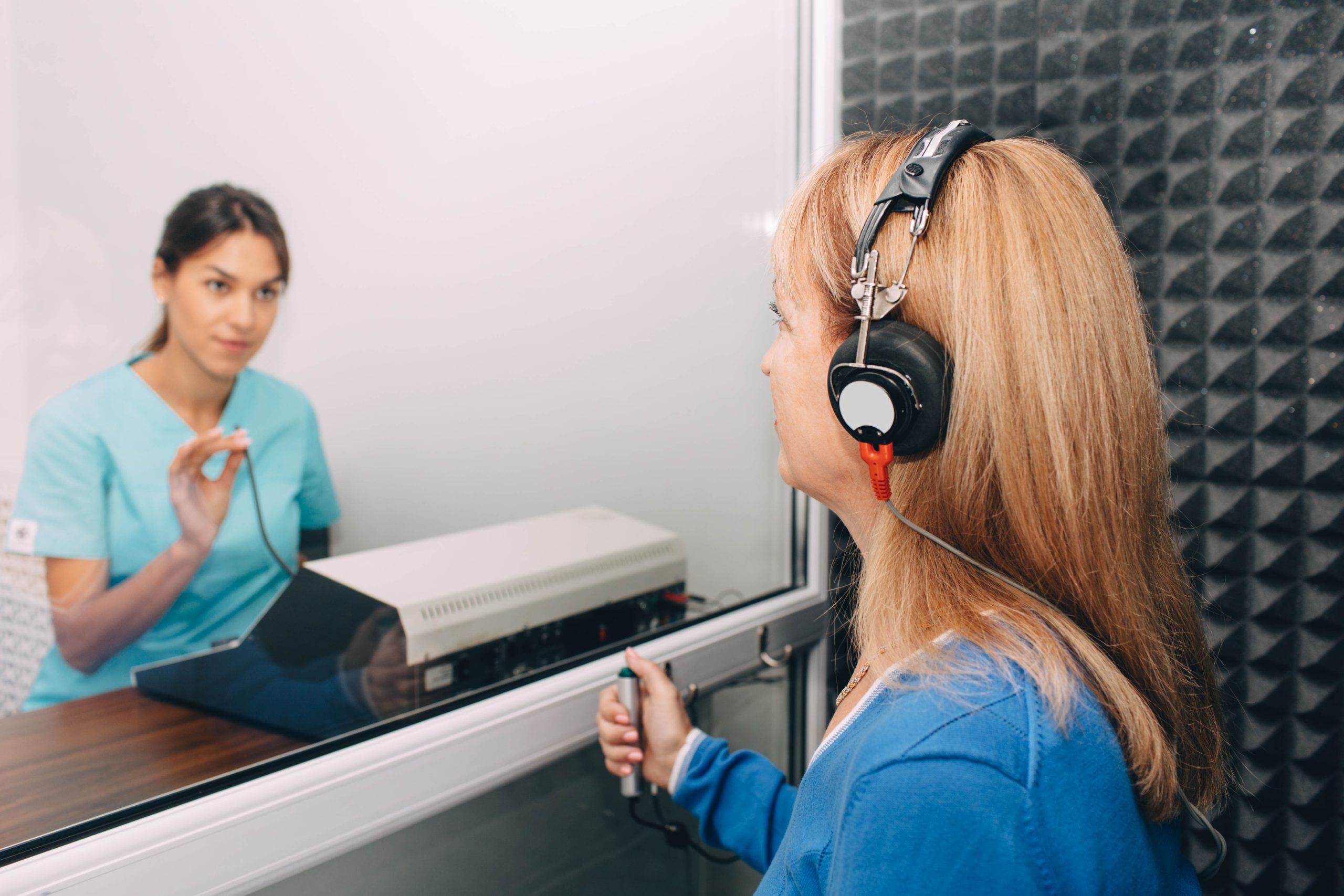
A professional hearing evaluation at Hanover Hearing Center takes about 30 minutes and is painless.
Hearing loss is one of the most common — and most overlooked — health conditions in the United States. Because it typically develops gradually, many people don't realize how much they're missing until the problem has progressed significantly. The good news? A simple hearing test can catch it early.
You're constantly asking people to repeat themselves

Frequently asking people to repeat themselves is one of the earliest and most recognizable signs of hearing loss.
If "Sorry, can you say that again?" has become a reflex in your daily conversations, your hearing may be to blame. While everyone mishears occasionally — in a noisy restaurant or a crowded room — having to ask for repetition regularly, even in quiet settings, is a red flag that deserves attention.
This is especially noticeable on phone calls, where the visual cues of lip-reading and facial expression aren't available. If phone conversations have become frustrating or exhausting, that's a significant sign.
Did you know? On average, people wait 7 to 10 years after first noticing hearing difficulties before seeking help. Early action makes treatment far more effective.
The TV volume keeps creeping higher

This is often the first sign that family members or housemates notice. If someone you live with has started complaining that the television, radio, or music is uncomfortably loud — or if you find yourself needing the volume at 40 when it used to sit at 20 — your ears may not be picking up sound the way they used to.
Speech clarity, particularly for consonants like "s," "f," and "th," is often the first thing to go. This is why the TV might seem loud enough in volume yet dialogue still sounds mumbled or unclear.
You struggle to follow conversations in noisy places
Restaurants, family gatherings, parties, offices — places with background noise are disproportionately challenging for people with hearing loss. If you find yourself nodding along and smiling without actually catching what's being said, or if group conversations leave you feeling exhausted and left out, this is called speech-in-noise difficulty — and it's one of the earliest clinically detectable signs of hearing decline.
The brain works overtime to fill in the gaps when the ears can't deliver clean signals, which is why many people with undiagnosed hearing loss report feeling unusually mentally fatigued after social events.
Important: Difficulty hearing in noise is not simply "normal aging." It is a measurable audiological condition that responds well to treatment.
You experience ringing, buzzing, or hissing in your ears
Tinnitus is the perception of sound when no external sound is present. It can manifest as ringing, buzzing, hissing, clicking, or roaring. While tinnitus can have many causes, it is very commonly associated with underlying hearing loss or damage to the hair cells in the inner ear.
If you experience tinnitus regularly — especially if it's in one ear more than the other, or if it's accompanied by dizziness — a comprehensive hearing evaluation is strongly recommended. Hanover Hearing Center offers Widex Tinnitus Therapy as part of our hearing care services.
High-pitched sounds have disappeared from your world
High-frequency hearing loss is the most common pattern of age-related and noise-induced hearing decline. The first sounds to fade are often the ones you might not immediately notice missing: birds chirping, the chime of a microwave, a child's voice, the consonants in everyday speech.
If the world has gradually become "muffled" or people seem to be mumbling more often than they used to, high-frequency loss may be the culprit. An audiogram — the chart produced during a hearing test — will clearly show exactly which frequencies are affected and by how much.
Common sounds that fade first: birds singing · doorbells · "s," "f," "th" consonants · children's voices · whispered conversations.